


Discover Everyday Innovations with 3D Printing

In recent years, 3D printing has transformed from a niche technology into a powerful tool that impacts our daily lives. This innovative process allows us to create three-dimensional objects from digital files, making it possible to produce everything from toys to medical devices. As we explore the world of 3D printing, we will uncover how this technology is changing the way we think about manufacturing, design, and even sustainability.
3D printing, also known as additive manufacturing, has opened up new possibilities for creativity and efficiency. It allows individuals and businesses to produce customized items quickly and at a lower cost. This blog post will highlight some everyday innovations made possible by 3D printing, showcasing its potential to enhance our lives.
The Basics of 3D Printing
Before diving into specific examples, it is essential to understand how 3D printing works. The process begins with a digital design, which can be created using computer-aided design (CAD) software or downloaded from online repositories.
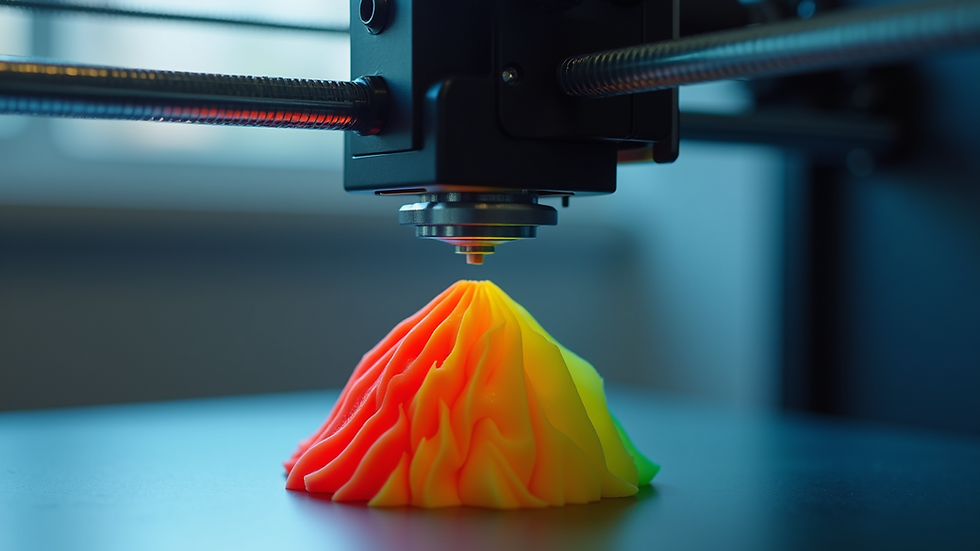
Once the design is ready, a 3D printer builds the object layer by layer. This is done by depositing material, such as plastic, metal, or resin, according to the specifications of the digital model. The printer continues to add layers until the final product is complete.
This method contrasts with traditional manufacturing, which often involves cutting away material from a larger block. 3D printing is more efficient, reduces waste, and allows for complex designs that would be difficult or impossible to achieve with conventional methods.
Everyday Applications of 3D Printing
Customized Home Decor
One of the most exciting applications of 3D printing is in home decor. Imagine being able to create unique pieces that reflect your style. With 3D printing, this is possible.
You can design and print items like vases, lampshades, or wall art. Many online platforms offer customizable templates, allowing you to tweak designs to fit your preferences.
For example, a simple search for "3D printed home decor" can yield countless ideas. You might find a geometric vase that perfectly matches your living room or a personalized lamp that adds a warm glow to your space.
Fashion and Accessories
The fashion industry is also embracing 3D printing. Designers are using this technology to create innovative clothing and accessories.
From intricate jewelry to avant-garde shoes, 3D printing allows for unique designs that stand out. Brands like Adidas and Nike have already started incorporating 3D printed elements into their products.
Imagine wearing a pair of shoes that are not only stylish but also tailored to fit your feet perfectly. This level of customization is becoming a reality thanks to 3D printing.
Medical Advancements
3D printing is making significant strides in the medical field. It is being used to create prosthetics, implants, and even bioprinted tissues.
For instance, prosthetic limbs can be customized to fit the individual perfectly, improving comfort and functionality. This technology is especially beneficial for children, as their needs change rapidly as they grow.
Additionally, researchers are exploring the potential of 3D printing to create organs for transplantation. While this is still in the experimental stage, the possibilities are exciting and could revolutionize healthcare.
Educational Tools
In education, 3D printing is enhancing learning experiences. Teachers are using 3D printers to create hands-on learning tools that engage students.
For example, a science teacher might print models of the solar system or human anatomy. These tangible objects help students understand complex concepts better than traditional textbooks.
Moreover, students can also learn to design their own 3D models, fostering creativity and technical skills. This hands-on approach prepares them for future careers in technology and engineering.
Sustainable Solutions
Sustainability is a growing concern, and 3D printing offers innovative solutions. By using recycled materials, companies can create new products while reducing waste.
For instance, some businesses are turning plastic waste into filament for 3D printers. This not only helps the environment but also provides a cost-effective material for printing.
Additionally, 3D printing can reduce the carbon footprint associated with traditional manufacturing. Since products can be made on-demand, there is less need for large inventories and long-distance shipping.
The Future of 3D Printing
As technology continues to advance, the future of 3D printing looks promising. We can expect to see even more applications across various industries.
For example, the construction industry is beginning to explore 3D printing for building homes. This could lead to faster construction times and lower costs, making housing more accessible.
Moreover, advancements in materials will expand the possibilities of what can be printed. Researchers are working on new materials that are stronger, lighter, and more versatile.
Challenges Ahead
Despite its many benefits, 3D printing also faces challenges. One significant concern is intellectual property. As designs can be easily shared and replicated, protecting original creations becomes more complicated.
Additionally, there are still limitations in terms of speed and material options. While 3D printing is efficient for small-scale production, it may not yet be suitable for mass manufacturing.
However, as technology evolves, these challenges may be addressed, paving the way for broader adoption of 3D printing.
Real-Life Success Stories
To illustrate the impact of 3D printing, let’s look at a few real-life success stories.
Local Businesses
Many small businesses are leveraging 3D printing to create unique products. For example, a local jewelry designer might use a 3D printer to produce intricate pieces that would be difficult to make by hand.
This not only allows for greater creativity but also reduces production costs, enabling the designer to offer affordable prices to customers.
Community Projects
In some communities, 3D printing is being used for social good. For instance, a group of volunteers might come together to print prosthetic hands for children in need.
These projects highlight the potential of 3D printing to make a positive impact on society, providing solutions to those who may not have access to traditional medical resources.
Educational Initiatives
Schools are also embracing 3D printing as a tool for innovation. Some institutions have established makerspaces where students can experiment with design and printing.
These initiatives encourage collaboration and creativity, preparing students for future careers in technology and engineering.
Embracing the 3D Printing Revolution
As we have seen, 3D printing is not just a passing trend; it is a revolutionary technology that is reshaping various aspects of our lives. From customized home decor to medical advancements, the possibilities are endless.
As individuals and businesses continue to explore the potential of 3D printing, we can expect to see even more innovative applications emerge.
Whether you are a designer, educator, or simply someone curious about technology, there is a place for you in the world of 3D printing.
So, why not take the plunge? Explore the resources available, experiment with designs, and discover how 3D printing can enhance your life.
In this exciting era of innovation, 3D printing is more than just a tool; it is a gateway to creativity, sustainability, and a brighter future. Embrace the change and be part of the 3D printing revolution.


Comments